Claustrophobic? Tips for a Stress-Free MRI Scan
If the thought of lying inside a tight tube fills you with a wave of panic, you are far from alone. For millions of people, claustrophobia and medical anxiety are very real barriers when it comes to getting a necessary MRI scan.
At Otto Kaiser Memorial Hospital (OKMH), we believe that fear should never stand between you and an accurate medical diagnosis. Modern diagnostics are essential for identifying internal injuries, joint damage, and soft tissue conditions. That’s why our approach to MRIs is designed around comfort, empathy, and patient-centered care.
If your doctor has recommended an MRI scan, here is what you need to know about managing scan anxiety—and how our team makes your experience as smooth and stress-free as possible.
Common Patient Anxieties About Imaging Scans
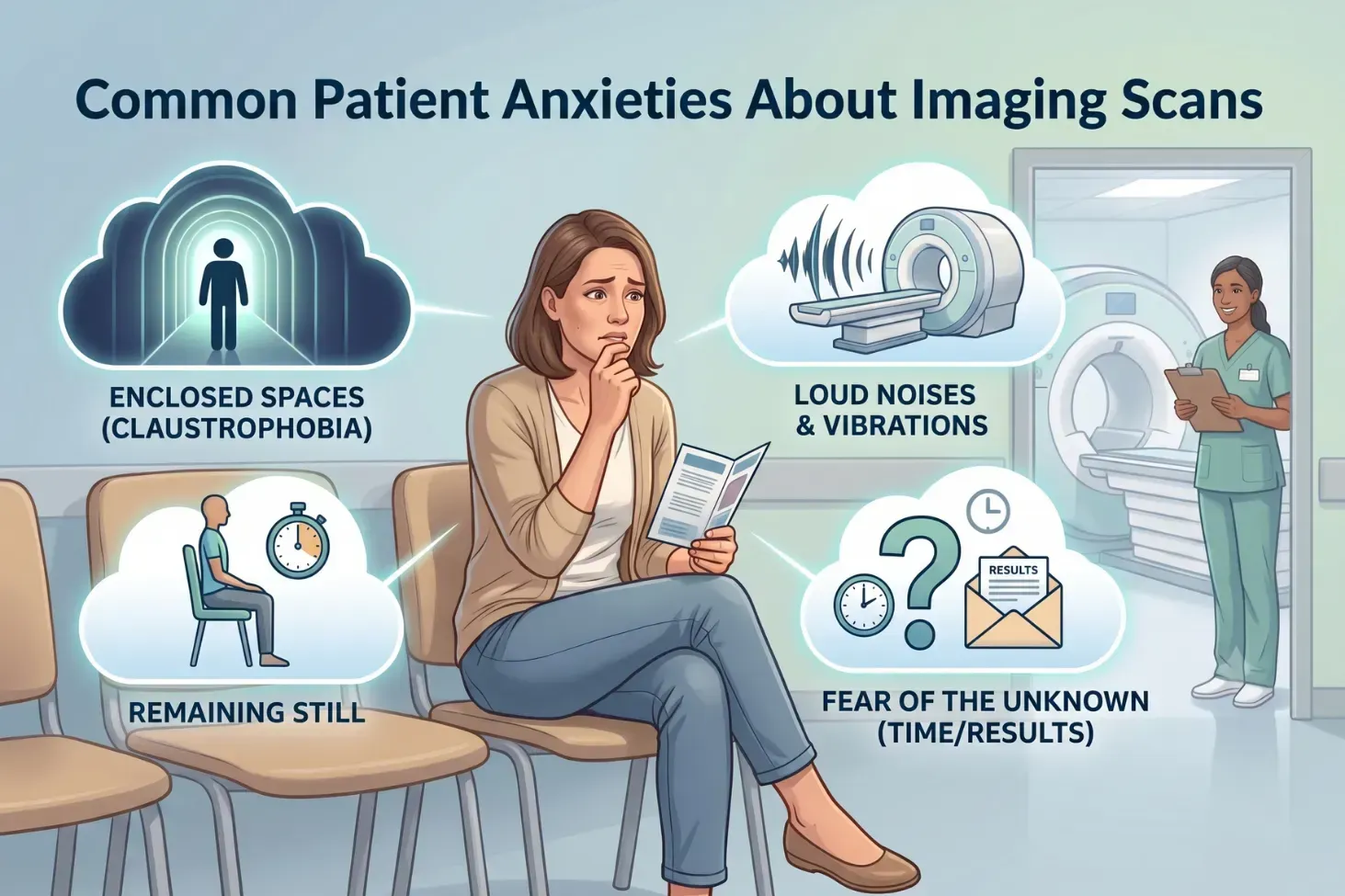
It helps to understand that feeling nervous before medical imaging is completely natural. When patients visit our
https://www.okmh.org/imaging, the most common concerns we hear include:
- Enclosed Spaces: Worrying about feeling trapped inside the machine.
- Loud Noises: The thumping, humming, and clicking sounds an MRI scan produces during operation.
- Remaining Still: Fearing that an accidental twitch will ruin the scan or force a restart.
- Fear of the Unknown: Not knowing how long the scan will take or what the results might show.
Recognizing these anxiety triggers is the first step toward overcoming them. Our imaging team is trained to listen to your concerns and support you through every minute of your procedure.
Techniques to Manage Claustrophobia and Anxiety
If you struggle with claustrophobia, preparing your mind and body beforehand can make a world of difference during your MRI scan. Try these proven techniques during your next appointment:
Practice Controlled Breathing
When anxiety kicks in, your breathing naturally becomes shallow and rapid, signaling a "fight or flight" response to your brain. Practice slow, deep breathing: inhale through your nose for four seconds, hold for four, and exhale slowly for six. Focusing on your breath gives your mind a grounding anchor.
Use a Washcloth or Eye Mask
For many patients, claustrophobia is triggered purely by sight. Simply closing your eyes before you enter the scanner—and keeping them closed throughout the test—can prevent the visual sensation of being in a close space. You can also ask for a light cloth or eye mask to help you keep your eyes covered comfortably.
Use Ear Protection & Music
The knocking noises of MRIs can heighten stress. We provide comfortable earplugs or headphones to soften the noise, and in many cases, you can listen to soothing music during your scan to keep your mind occupied.
Know You Have an "Escape Hatch"
You are never left alone during an MRI scan. Your technologist monitors you continuously from an adjacent room through a window and a two-way intercom system. You will also hold a squeeze bulb in your hand; pressing it immediately alerts the technician to pause the scan and check on you.
What Should You Ask Your Technician or Doctor?

Clear communication is one of the best tools for reducing fear. Before your appointment, don't hesitate to ask your physician or technologist these questions:
- "Can I visit the imaging room beforehand to see the equipment?"
- "Is an open MRI design or wide-bore scanner an option for my specific test, or can we adjust positioning (like entering feet-first)?"
- "How long will each individual scanning sequence last?"
- "Can my doctor prescribe a mild, short-acting anti-anxiety medication for me to take right before the appointment?"
If your physician recommends medication for relaxation, you will simply need someone to drive you home after your procedure.
A Patient-Centric Approach to Imaging at OKMH
At Otto Kaiser Memorial Hospital, we combine high-level diagnostics with big-hearted, local care. We understand that every patient’s comfort threshold is different.
Whether you are visiting us for advanced MRIs, digital mammography, CT scans, or ultrasound, our radiology specialists prioritize your physical and emotional well-being. From explaining each step before it happens to giving you time updates during the procedure, we tailor our outpatient services so you feel safe and in control.
If your MRI scan reveals an underlying orthopedic or joint issue, our integrated network makes transitioning to follow-up care effortless—linking your diagnostic results directly with our specialists at Kaiser Orthopedics or our personalized physical rehabilitation team.
Frequently Asked Questions (FAQ)
What is the difference between a traditional MRI and an open MRI?
A traditional MRI scan uses a capsule-style magnet to generate high-resolution images. An open MRI features open sides, which can reduce claustrophobia. While an open MRI provides extra space, traditional wide-bore MRIs often provide higher magnetic strength for certain detailed joint and nerve diagnostics. Your doctor can help determine which scanner type is right for your medical needs.
How long does an MRI scan usually take?
Most MRI scan procedures take between 15 to 45 minutes, depending on the body part being scanned and the number of images required for complete diagnostics. Your technician will break the process down into smaller imaging sequences lasting a few minutes each.
Can a family member stay in the room with me?
In many cases, a loved one can stay in the room with you during your MRI scan to offer comfort, provided they pass the standard MRI safety screening (such as having no metallic implants or pacemaker).
Are MRIs safe?
Yes. MRIs use strong magnetic fields and radio waves—not ionizing radiation—to create pictures. It is a safe, painless diagnostic tool used across all fields of medicine.
Experience Compassionate Care Close to Home
Don't let scan anxiety delay the essential care and answers you deserve. At Otto Kaiser Memorial Hospital, our team is ready to guide you through a gentle, supportive imaging experience.
Need to schedule an imaging appointment or discuss your upcoming scan? Visit our
Contact us online today or call our imaging department directly to speak with our compassionate team today!